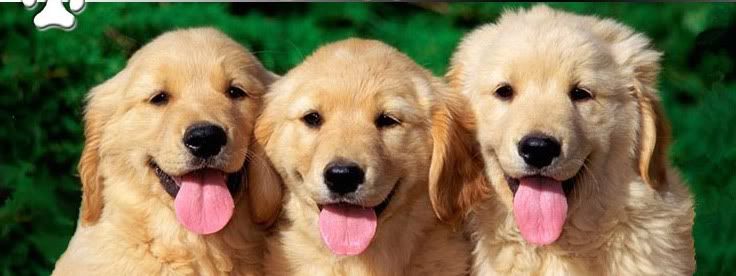
Some useful tips on Dog training
Here Are Some Tips on Dog Training
Dog training doesn't mean you have to take your dog to some expensive dog training school. Dog training can be done by you in your own house and backyard. Dog training isn't difficult if you follow some basic guidelines.
Your dog wants to make you happy. That is how most dogs are, especially puppies. This means that the most important part of dog training is that you have to praise them when they do something right. Dog training is all about rewards and praise. It is not about getting angry at the dog or yelling. Dogs do not learn from negative reinforcement.
Don't go to fast and try to introduce to many things into your dog training to fast. Only do one new command a week, but work on it daily. With dog training the dog isn't going to master it immediately. It takes repetition and patience. Even after they get the command, keep working on it even after you start a new one. Don't let them forget what they have alread learned. Again, don't start a new one until the old one is mastered.
Here are some of the basics of dog training so you can get an idea of where to start your dog training. The first thing most people want to teach in dog training is sit. Start by saying sit in a slightly louder and more authoritative manner than normal while pushing the dog into the sit position. As soon as the dog sits give it a treat and praise. Don't forget, dog training is about praise and rewards. That is how the dog will know it is doing what you want it to do.
That is the basics of what they will teach you at dog training school, but charge you lots of money. Dog training is easiest with a very young puppy who doesn't have any bad habits. When you are doing it with an older dog then the dog training becomes much more difficult, so start early.
Should you do own an overly aggressive k9 that is instead shy, it is essential you begin working with them as quickly as feasible. The final point you want to happen is have your dog harm another dog, a child, or even somebody within your own household.
Right here Are Four Dog education Tips To give A try , Prior to Making The Choice To putting Your Pet down.
1. Education sessions
The first thing you require to do is construct the confidence and security of your k9 by setting up training sessions. Each k9 is likely to have some kind of concern whether it's other individuals on walks, kids working around, or other dogs approaching them. For this cause, you require to create a managed surroundings to ease this tension. You can have a good friend meet up with you whenever you go over a walk and also have the good friend give your dog a treat. Points like this can help them become comfortable.
Two. Socialization
Many periods an aggressive k9 is not utilized to being around other dogs and being a outcome, they'll show aggression. Luckily, you can alter this personality and train them to enjoy the organization of other dogs. Begin out by maintaining your k9 over a leash in an region with several other dogs which are calm and comfy. If your k9 exhibits indicators up anger, maintain the leash tight and give it a yank right here and there. Show them they need to understand to play good.
Three. Prevent aggressive adult dogs
The last point you require to do is place your dog with an aggressive older dog. That is one from the most essential dog training tips to get into consideration. Believe of it as being related to people; you don't wish to surround your self with negative individuals. Instead, you want to surround yourself with confident, positive and successful people. The same holds accurate for dogs as you want to surround them with calm and playful dogs.
4. Muzzle
The last of the dog education tips is to purchase a muzzle to use during socializing and obedience lessons. It is essential you familiarize your dog with it by placing it on just prior to feeding it or before playing in the yard. Then, it won't be a issue placing it on prior to these sessions. While education your dog, you don't want them to assault an additional k9 or individual. The muzzle is a precaution and could be removed as your k9 starts to make progress.
Choosing a Hunting Dog that is Right for You
Choosing a Hunting Dog that is Right for You
Choosing a puppy and picking a hunting partner is a big decision. Breed and Breeder
Most important... is what breed of dog best suits your hunting needs. Visit local breeders of the types of dogs you are considering.
Breeders don't just want to sell dogs; their reputations rely on putting the right dog with the right person and situation.
Choosing a puppy and picking a hunting partner is a big decision. While a family dog still needs to be carefully selected to fit into your home life, deciding on the right hunting dog requires a bit more forethought.
Breed and Breeder
Most important... is what breed of dog best suits your hunting needs. While some breeds crossover well, others tend to excel in one area.
Books and the Internet are invaluable research tools. This can help you understand how different breeds deal with home life or how much non-hunting exercise they will require.
Choosing a puppy Don’t skimp on this step, in-depth research should help you narrow down your choices.
Visit local breeders of the types of dogs you are considering.

Talk to them about the type of hunting you do, your home situation, and how much time you are willing to devote to training.
Breeders don't just want to sell dogs; their reputations rely on putting the right dog with the right person and situation.
Inform them what your future plans are with the dog. After meeting with breeders, you should have a good idea which dog is right for you.
Observe the Litter
While bloodline doesn't matter in a family pet, it is of the utmost importance when choosing a puppy that will become your hunting dog.
Be sure to see both parents and take a good look at their pedigrees. People who breed show dogs often select those that lack the traits useful in a hunting dog, so avoid litters by dogs bred for show. Though this is not always the case.
After finding parents that look good on paper, ask to tag along to watch the parents train, or better yet, join them on an actual hunt. An experienced breeder won't hesitate to prove their dogs' bloodline, but remember you will be paying for that heritage as well as for the individual puppy.
Choosing a Puppy
Choosing a puppy If your earlier research was thorough, you should know what traits to look for in the breed you have selected.
However, choosing a puppy goes beyond physical characteristics; proper disposition is imperative in a hunting dog.
Do not choose a pup prior to six weeks of age as their temperament can still change in that time.
As most breeders won't allow pups to leave their mother until seven or eight weeks old, this still leaves a fair window for you to select the one that meets your needs before they are sold. Some breeders prefer to wait 10 weeks.
Ask the breeder his opinion which pup might be a good match for your situation. The breeder would have spent quite a bit of time with his puppies, and has figured out the most dominate, friendly, independent, skittish, etc. Every dog has their own unique personality.
You want to look for a pup that is not shy or skittish; the one that wanders over to lick your hand is a good contender.
However, if a pup tries to lay claim to you, they are likely dominant which could be a problem later on, so be sure dominance is something you want in a dog before selecting a puppy that displays the trait.
A big issue for a prospective hunting dog is how the pup will react to noise. Get down low to the ground and make a loud sound. If a puppy runs off and doesn't come back to you, they may not be the best choice for hunting.
You also want your pup to have been physically handled by the breeder, so they are not afraid of human interaction.
If you follow these steps and make sure you pick the right breeder, litter and puppy, you will be well on your way. Remember that choosing a puppy is itself a first step; proper training once you get your new addition home is crucial.

 Posts
Posts

